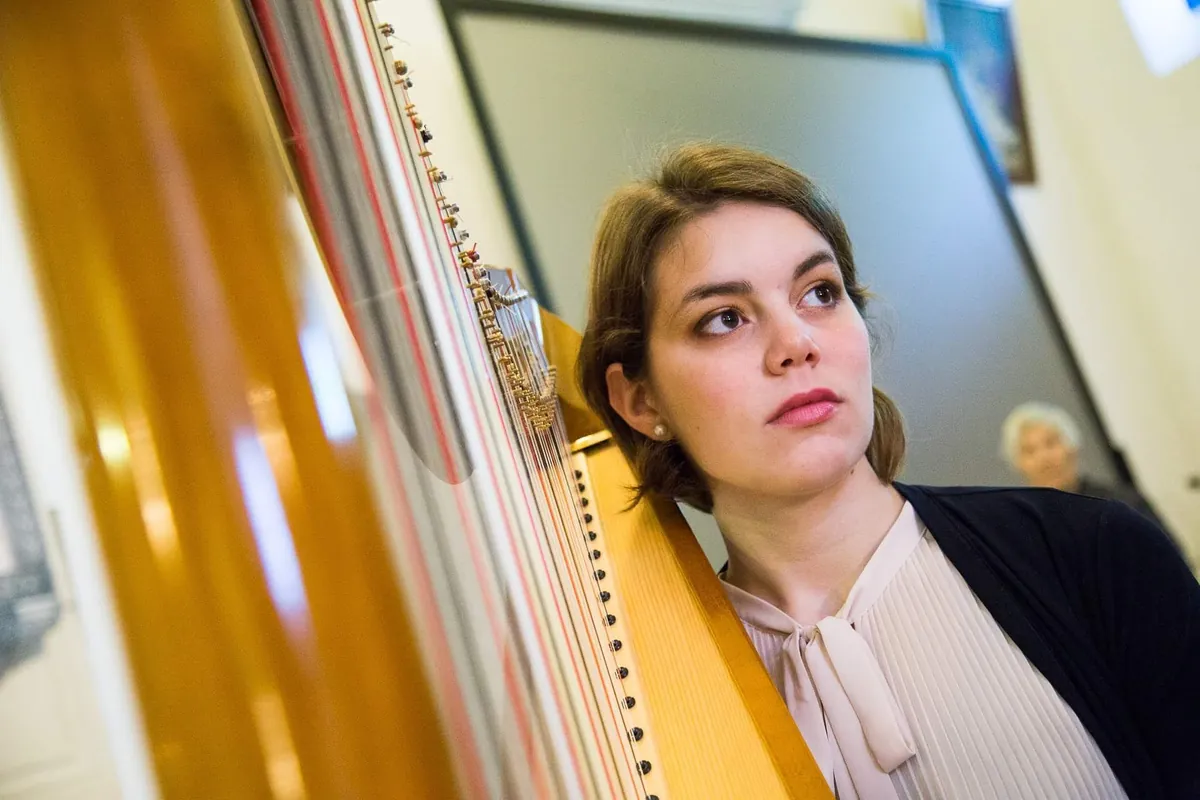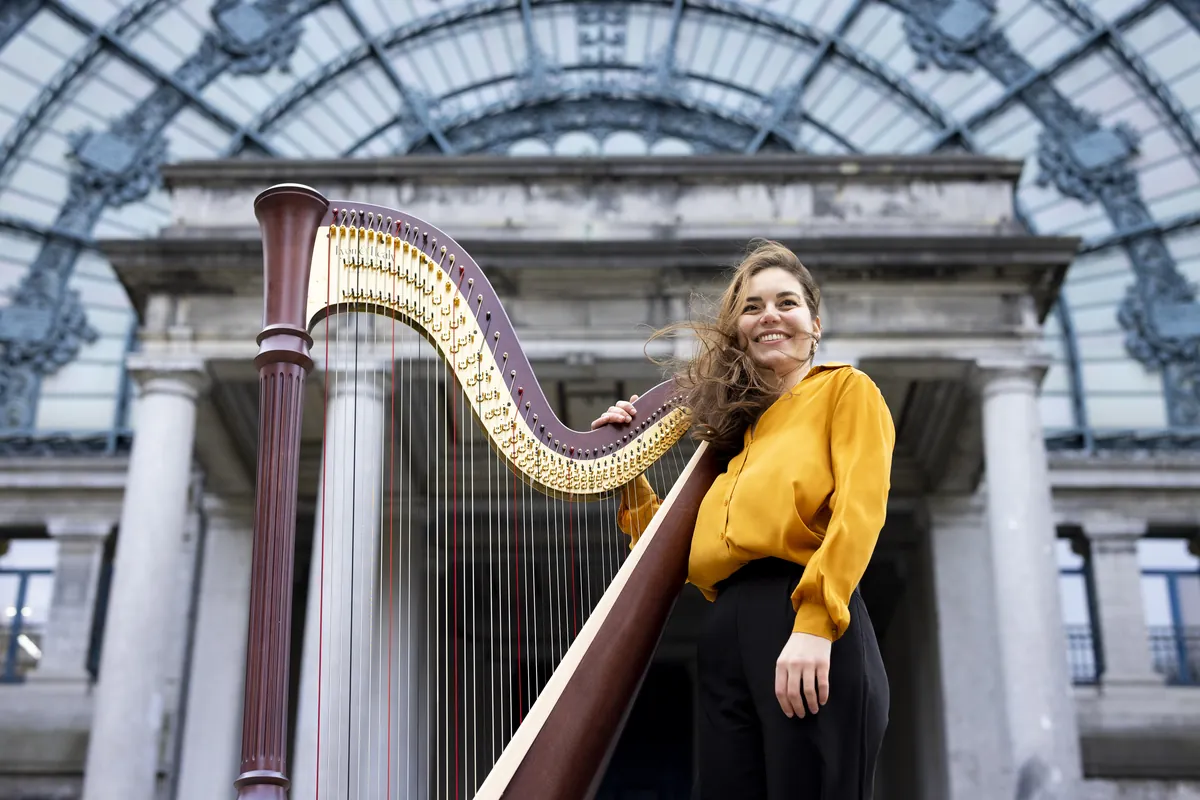
One harp, many stages.
Eleonora Congiu plays as a guest harpist with the Belgian National Orchestra, works behind the scenes at the opera house La Monnaie, tours four chamber projects across Europe, and teaches harp, working to bring it to new audiences through the Pop'Harpe.
Next dates
Full calendar →| Date | Programme | Venue | City |
|---|---|---|---|
| TBC | Duo Léger: Dowland to Motown | Holy Trinity Goodramgate | York, UK |
| TBC | Zéphyr Duo: Danze dal Mondo | Ente Concerti Alba Pani Passino | Oristano, IT |
| TBC | Zakoustics: concert for ages 0–3 | L'Entrela' | Evere, BE |
Dates are being confirmed; the full calendar is updated first.
Orchestra
Guest harpist with the Belgian National Orchestra since 2021; before Belgium came the Orchestra Giovanile Italiana and the European Union Youth Orchestra. At La Monnaie she works off the stage entirely: as assistant orchestra manager she helps coordinate the chamber music activities and supports the running of the orchestra's activities.
Chamber music
Four standing projects, none of them the same shape: harp and tenor tracing four centuries of repertoire, harp and flute across continents, three harps playing dances, and a soprano-and-electronics duo that takes the old repertoire apart.
Teaching and the Pop'Harpe
A harp costs more than most families will ever spend on an instrument. The Pop'Harpe is made of corrugated cardboard, costs almost nothing, and is a real harp. Eleonora plays one on the floor of Belgian culture centres, surrounded by children who get to explore it hands-on.
Make the Decision
The New Zealand composer Penelope Axtens wrote and dedicated this solo harp piece to Eleonora. Scores, programme notes and performance history are in the press kit.